Health & Safety Policy for Richmond upon Thames Skip Hire
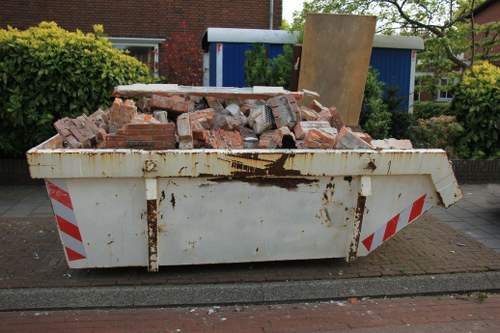 Richmond upon Thames Skip Hire maintains a clear and practical Health & Safety policy that governs every aspect of our rubbish company operations. This document sets out our commitment to protect employees, contractors, customers and the public while delivering skip hire and waste removal services. Our aim is to reduce risk through good planning, reliable procedures and continuous monitoring. We balance efficient rubbish collection with a culture of safety, ensuring that waste collection and skip management are carried out responsibly and without unnecessary risk.
Scope and Objectives
This policy applies to all activities carried out by our skip hire service, including vehicle movements, loading and unloading of skips, site assessments, transfer of waste and storage. The objectives are to: prevent work-related injury and ill health, ensure safe operation of plant and vehicles, maintain effective communication of hazards, and meet general legal and industry safety expectations without over-referencing local statutory detail. We expect everyone connected with the skip hire company to understand their role in achieving these objectives.
 Roles and responsibilities are clearly defined. Management holds overall responsibility for implementing the policy and providing resources, while supervisors oversee day-to-day safety compliance. Drivers and operatives must follow safe working methods, use provided PPE and report hazards promptly. Contractors and sub-contractors engaged for waste removal must demonstrate equivalent safety standards before work begins. All personnel are empowered to stop unsafe work and raise concerns through established reporting lines.
To manage risk we use formal risk assessment and method statements for common tasks such as skip placement, manual handling, and interaction with members of the public near sites. Controls are applied using a hierarchy that focuses on elimination, substitution, engineering solutions and administrative actions supported by personal protective equipment. The policy emphasizes practical, measurable controls that reduce exposure to hazards associated with rubbish removal and site operations.
The following key control measures are implemented across our waste collection and skip hire operations:
- Safe vehicle operation: routine inspections, secure load practices and driver training;
- PPE and equipment: hi-vis clothing, gloves, safety footwear and manual handling aids;
- Site assessment: pre-placement checks for ground condition, access and public safety;
- Segregation of waste types: procedures to identify and isolate hazardous materials;
- Communication: toolbox talks, clear signage and documented instructions for on-site teams.

Training, Competence and Supervision
Training is tailored to roles and kept current. Drivers complete vehicle safety and load-securing modules, operatives receive manual handling and waste-awareness training, and supervisors are trained in incident investigation and workplace inspections. We maintain records of qualifications and refresher training and ensure that new starters are given an induction that covers our safety expectations and waste handling protocols. Competence is continually assessed through observation, feedback and periodic testing.Handling hazardous or unexpected waste is treated with particular caution. Where potentially dangerous materials are encountered, work is stopped, and a competent assessor is called in to advise on safe segregation, containment and disposal. Our rubbish removal teams are trained to identify items that should not be placed in general skips and to follow procedures for isolation, labelling and controlled removal. Vehicle maintenance schedules are adhered to rigorously to prevent mechanical failures that could lead to incidents during collections.
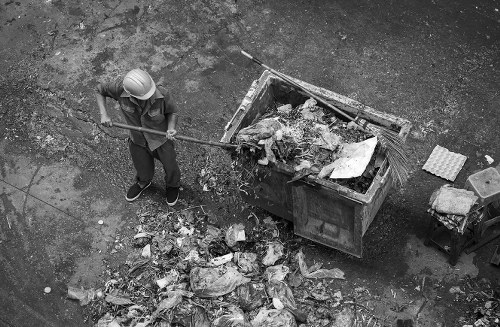 Emergency procedures, first aid provision and incident reporting are integral to this policy. We maintain clear steps for responding to spills, injuries or near-misses, including immediate containment actions, notification, and documented follow-up. Incident investigations focus on root causes and corrective actions, with outcomes shared across the workforce to prevent recurrence. Regular drills and reviews help ensure that responses remain effective.
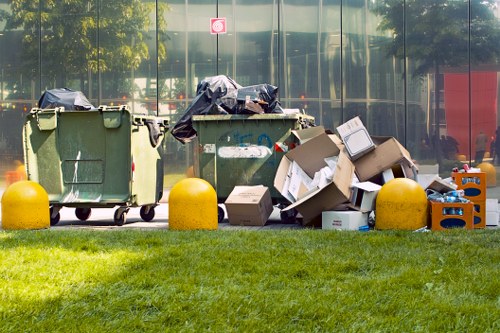 Monitoring, review and continuous improvement underpin our approach to health and safety. We carry out routine inspections, audits and performance checks that measure compliance with the policy and identify opportunities to improve the way our skip hire service and rubbish collection operate. Non-conformances are logged and tracked until closed, and senior management reviews safety performance at defined intervals. Our commitment is to learn from experience and adapt practices so that our waste removal service remains safe, reliable and responsible.
Contractor management and supply chain safety are treated as extensions of our own systems. Contractors are required to demonstrate safe systems of work and to coordinate with our teams to manage interface risks. Where subcontracted services are used, we verify competence, ensure clear lines of communication and confirm that insurance and safety documentation are in place before work commences.
All employees are encouraged to contribute to safety through active participation in meetings, hazard reports and suggestions for improvement. The policy promotes a positive safety culture where proactive communication and mutual responsibility reduce the likelihood of incidents during skip delivery, collection and on-site operations. Everyone has a part to play in maintaining safe working conditions.
Review of this policy takes place at regular intervals and after any significant incident or change in operations. The policy is supported by documented procedures and work instructions that cover the operational details of the skip hire and rubbish removal service. By maintaining clear expectations, practical controls and continuous oversight, Richmond upon Thames Skip Hire strives to deliver waste services that protect people and property while meeting operational needs.